Historical Record · 2019 – 2022
How it began — from bare degraded farmland to restored forest
When the Ecorewire Centre model pilot project was established in 2019, the 51-hectare site at Udakpa, Ubiaja was dominated by grass forbs, sedges, fire-climax derived savanna vegetation, and a handful of subsistence farmers practising slash-and-burn shifting cultivation. The first batch of 2,500 seedlings — Terminalia ivorensis, Nauclea diderrichii, Mansonia altissima, Khaya grandifoliola, Pericopsis elata, Bombax buonopozense, Triplochyton scleroxylon and others — was transported from the Aduwawa nursery in Benin City to Udakpa and planted on Saturday 29 June 2019. By August 2019, four farmers were accommodated in the first restored hectare. In 2020, planting covered 2 hectares with ca.75% regeneration success. In 2021, 2,000 seedlings were moved for beating-up; five farmers received improved cassava varieties (Vitamin A-enriched) from IITA, Ibadan via Prof. Isikhuemen. By 2022, over 25,000 timber tree seedlings had been raised at Aduwawa, with 5,000 planted at Udakpa, expanding restored area to approximately 5 hectares.
2022 · Field Operations & Agroforestry
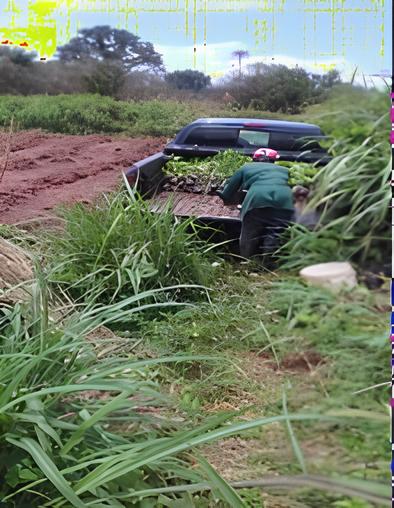 Field Operations
01
Transporting seedlings to Ecorewire Centre Project site — 2022
Project 01 · 2022
Nursery to Field · Planting Season
Seedling transport — Aduwawa nursery to Udakpa project site
Aduwawa Nursery, Benin City → Udakpa, Esan South East LGA · 2022
This photograph shows the field transport operation — a team member loading and transporting freshly nursed seedlings by vehicle from the ECOREWIRE nursery in Aduwawa, Benin City to the Udakpa project site. By 2022, approximately 5 hectares of the Udakpa pilot site had already been planted with an assortment of endangered and vulnerable endemic rainforest timber tree species. Each consignment of seedlings required careful handling during the journey from nursery to field to prevent root ball damage and desiccation, with teams working to get seedlings into pre-dug planting holes as quickly as possible after arrival at the site.
2022
 Agroforestry Model
02
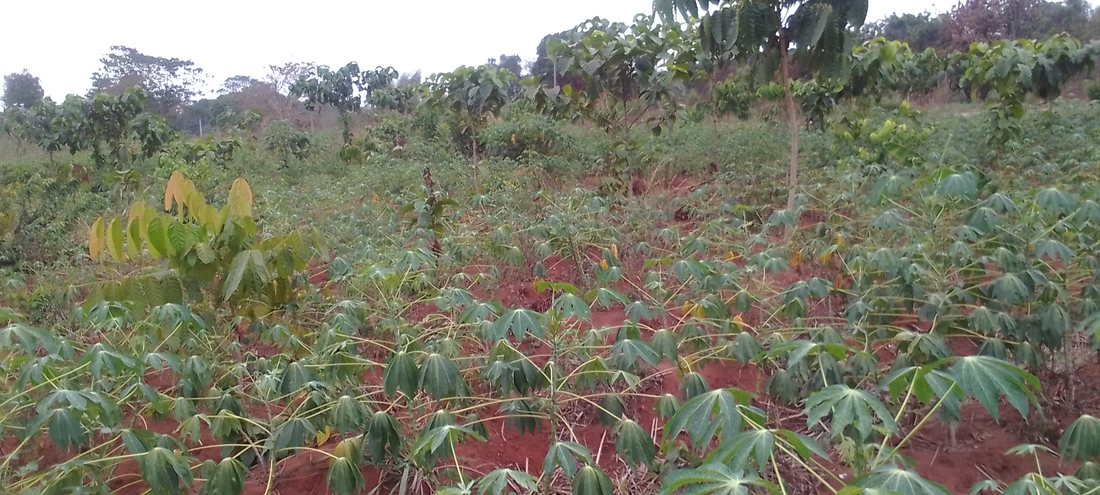
Cassava interplanted with forest tree seedlings at Ecorewire Centre Project Site (2022)
Project 02 · 2022
Agroforestry · Inclusive Restoration
Cassava interplanted with indigenous timber tree seedlings — the agroforestry model in action
Ecorewire Centre Project Site, Udakpa · 2022
This photograph illustrates the early phase of ECOREWIRE's inclusive agroforestry model: young indigenous timber tree seedlings are deliberately established alongside cassava crops, allowing subsistence farmers to cultivate food between tree rows. This arrangement sustains household livelihoods while the tree canopy develops season by season. The cassava provides initial shelter and partial shade for the vulnerable young seedlings, reducing soil temperature and moisture stress during establishment. As the trees grow taller over successive seasons, their canopy gradually closes over the cassava, which is progressively phased out as the forest structure becomes self-sustaining.
2022
 Pilot Site Overview
03
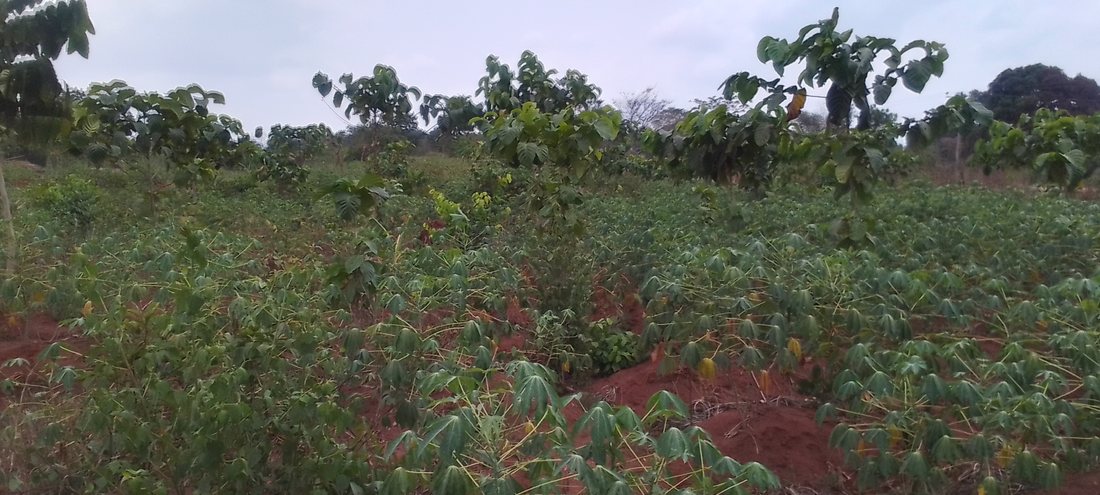
Ecorewire Centre Project site (2022)
Project 03 · 2022
Pilot Site · Landscape Overview
Overview of the Udakpa pilot site — three years of restoration visible
Ecorewire Centre Project Site, Udakpa · Esan South East LGA · 2022
This landscape overview of the ECOREWIRE Centre Project site at Udakpa, taken in 2022, shows the mosaic of restored indigenous timber trees across various zones — three years after the first seedlings were planted in June 2019. The photograph captures the mixed-age canopy developing across the 5-hectare restored zone, with trees at different growth stages visible across the hillside. Taller, more advanced specimens planted in the earliest phases (2019/2020) stand above younger seedlings established in subsequent seasons, illustrating the progressive, zone-by-zone approach to restoring the full 51-hectare site.
2022
2022 – 2023 · Wildfire Crisis & Replanting
Field Report · Crisis & Resilience
Wildfire strikes — 10 hectares burnt and replanted
During the last quarter (dry season) of 2022 through early 2023, two wildfire incidents destroyed most young poles and saplings across approximately 10 hectares of the restored area. Fires spread from adjacent farmland where slash-and-burn clearing is still widely practised. ECOREWIRE responded immediately: during the 2023 planting season (June to August), the burnt portion was systematically replanted while beating-up was carried out across other fire-affected areas. Surviving stumps and root crowns with viable coppice regeneration were retained and incorporated into the replanting plan.
2023 · Fire-Tracing Operations
Field Operations · Fire Prevention · 2022/2023 & 2023
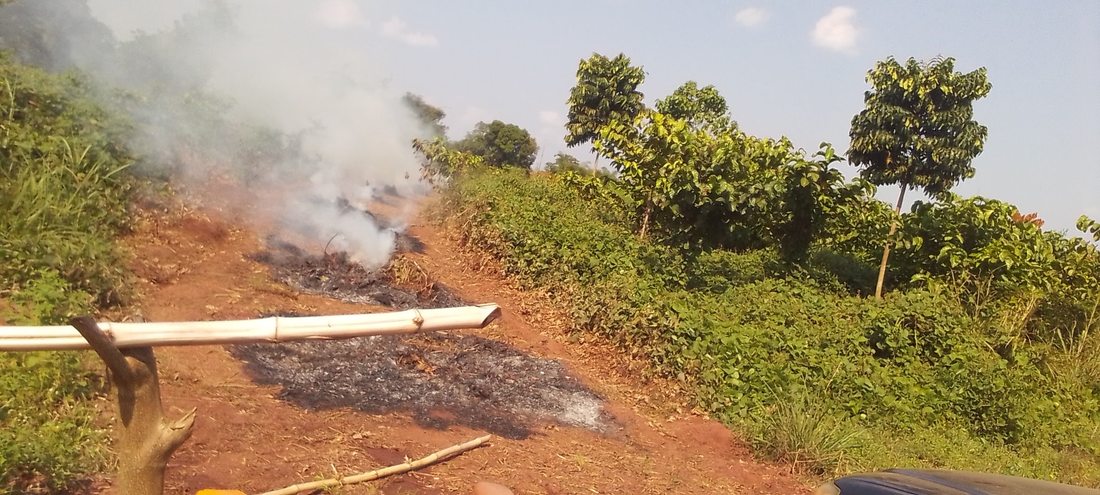
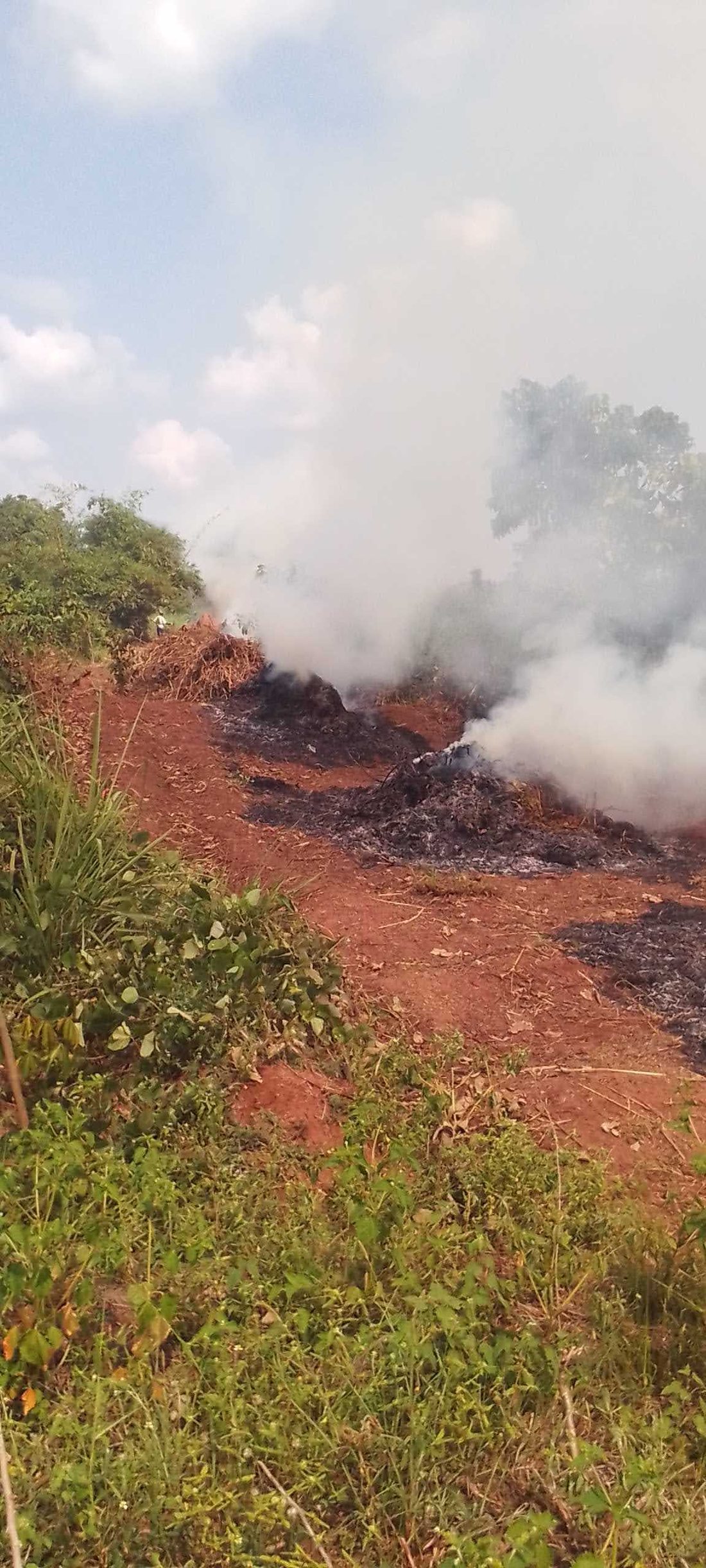
Two fire-trace tracks established — protecting the restoration investment
During the last quarter of 2023 and early 2024, fire-tracing was carried out at strategic but vulnerable locations to forestall wildfires and avoid a repeat of the 2022/2023 losses. Fire-tracing involves systematic clearing and maintenance of firebreak corridors — strips of bare, low-fuel ground that block lateral spread of fires entering from neighbouring farmland. The two photographs below are the correct, individually captured fire-trace track images. The 2024 dry season passed without any repeat wildfire incidents.
Fire-trace track in Ecorewire Centre (2022/2023) — smoke visible as the firebreak corridor is cleared and controlled burning applied to eliminate accumulated dry fuel load
Fire Trace Track in Ecorewire Centre Project Site (2023) — second major firebreak established at a strategic perimeter zone to protect the recovering restoration area
2024 · Nursery, Refinement & Recovery
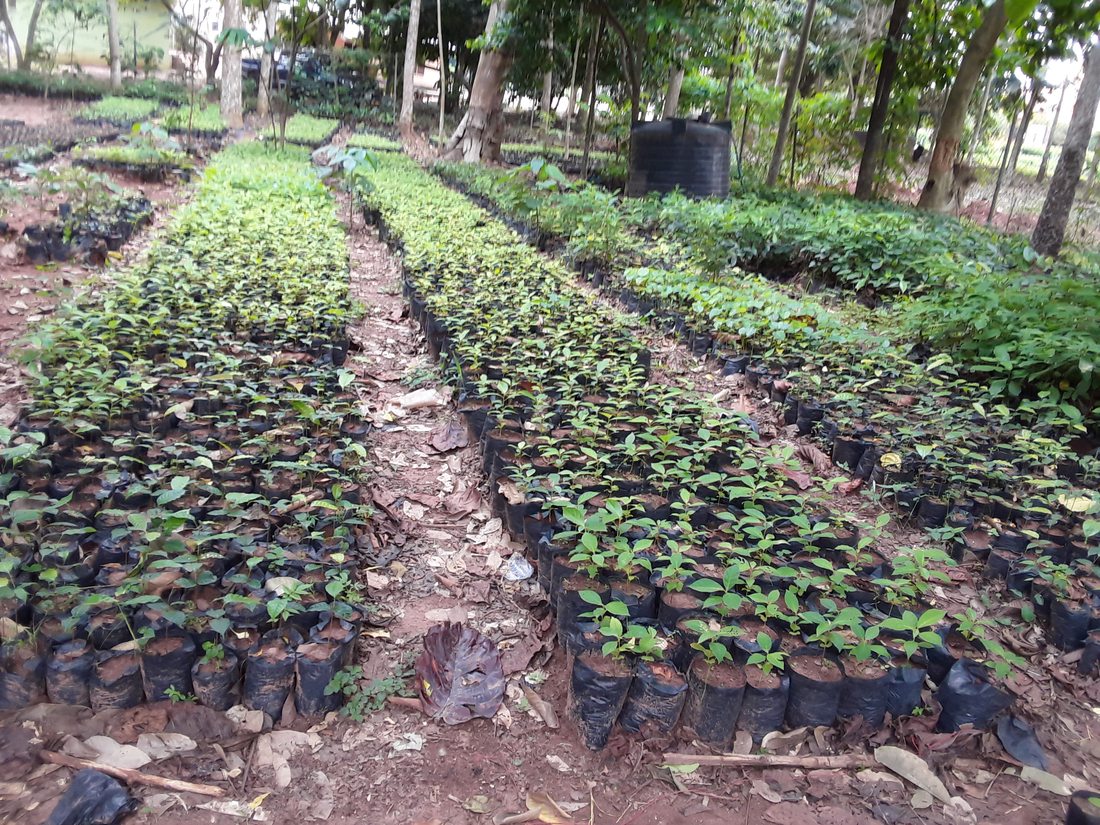 Nursery Operations
04
Ecorewire nursery at Aduwawa, Benin City (2024)
Project 04 · Nursery 2024
Nursery Operations · Aduwawa, Benin City
Aduwawa nursery — 50,000 seedlings raised in 2024 for restoration and client supply
Ecorewire Nursery, Aduwawa, Benin City · 2024
The ECOREWIRE nursery at Aduwawa, Benin City is the central propagation hub for all restoration and client supply operations. This photograph shows thousands of potted seedlings in nursery bags arranged in production rows — the 2024 cycle raised 50,000 assorted indigenous species seedlings, including Nauclea diderrichii, Khaya spp., and other endangered and vulnerable taxa on the IUCN Red List. The nursery operates year-round, maintaining a living catalogue of Edo State's native tree species, matched to the specific ecological conditions of each client project site before dispatch to maximise survival rates in the field.
2024
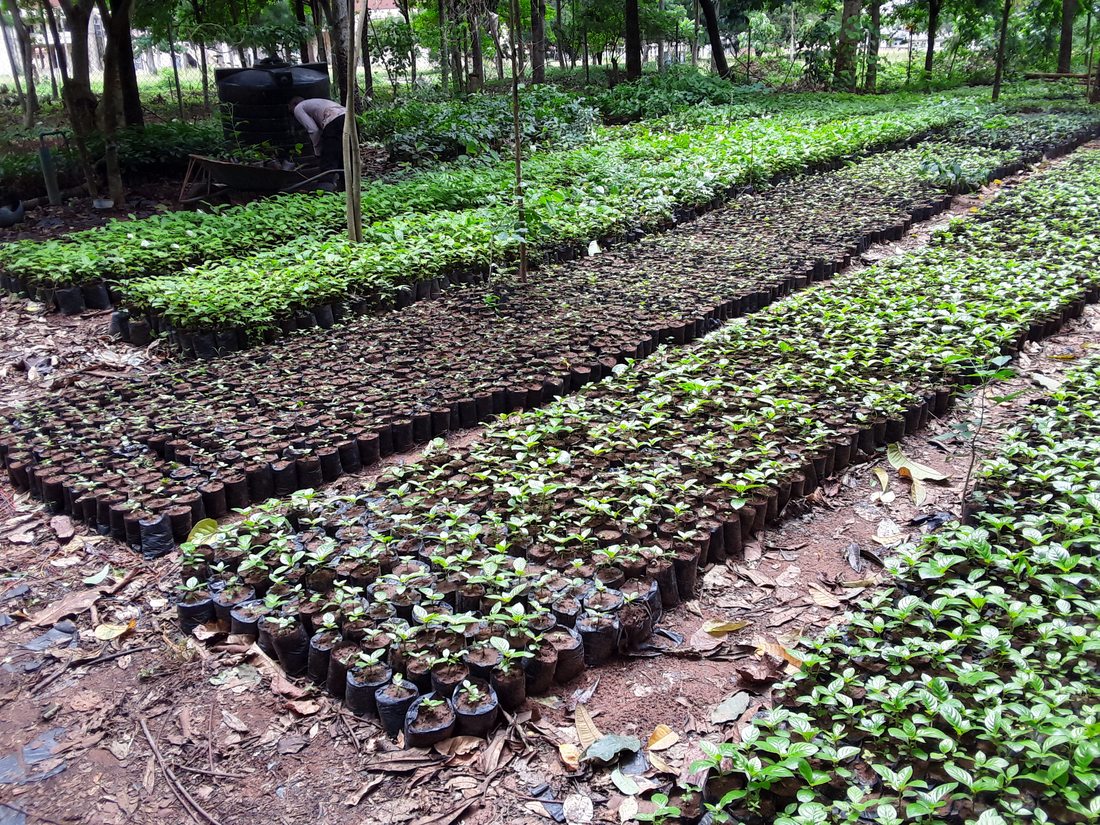 Nursery Operations
05
Ecorewire nursery (2024) — extensive production rows of potted indigenous timber tree seedlings
Project 05 · Nursery 2024
Nursery Production · Scale & Diversity
Scale of the 2024 nursery production — rows of indigenous seedlings ready for dispatch
Ecorewire Nursery, Aduwawa, Benin City · 2024
A second view of the Aduwawa nursery showing the full scale and species diversity of the 2024 production cycle. Thousands of seedlings in black nursery bags are arranged in species-sorted production rows, with more advanced specimens in the background and younger, recently pricked-out seedlings in the foreground. The nursery functions not only as the supply base for external client contracts, but also as a living gene bank for Edo State's forest flora. The 2024 production cycle generated the replacement stock needed for post-fire replanting at Udakpa as well as fulfilling the 50,000-seedling internal production target.
2024
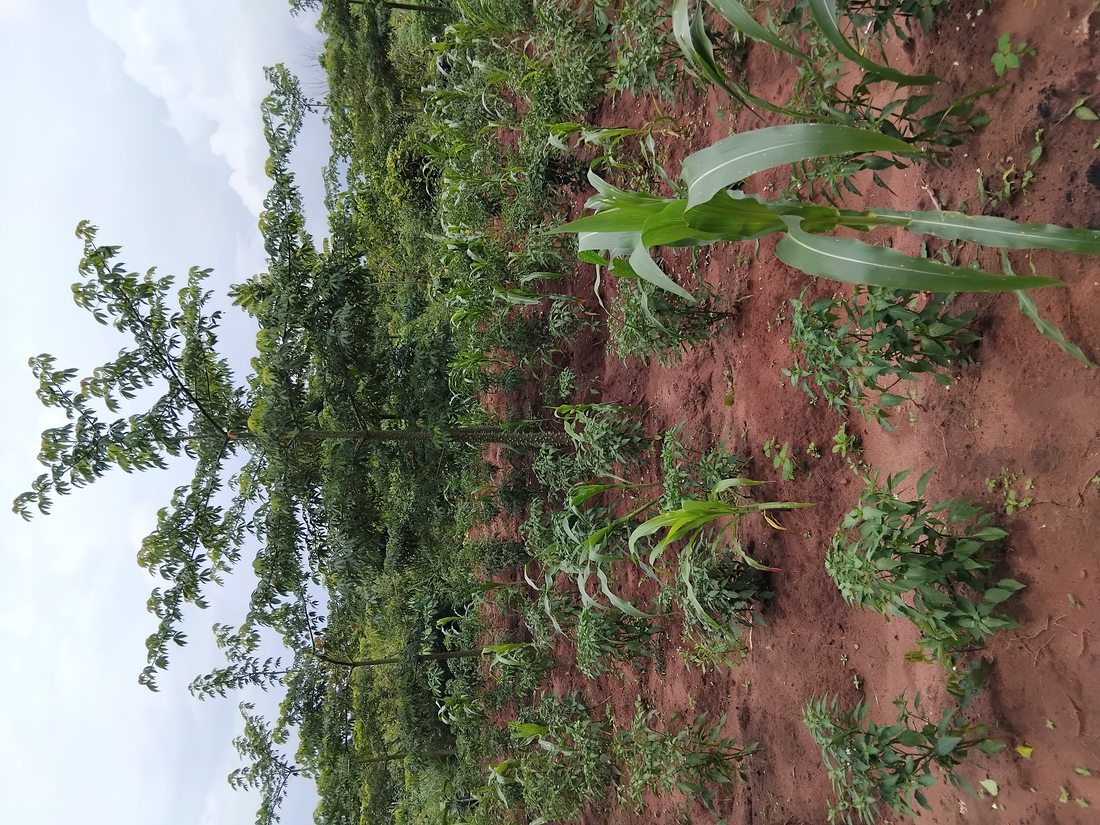 Agroforestry 2024
06
Forest tree and arable crop mixture at Ecorewire Project Site (2024)
Project 06 · 2024
Agroforestry · Mature Mixed System
Mature agroforestry system — maize and crops beneath established timber tree canopy
Ecorewire Centre Project Site, Udakpa · 2024
By 2024, ECOREWIRE's agroforestry model at the Udakpa site had evolved into a mature multi-storey mixed system. This photograph shows maize, pepper and other arable crops growing alongside established indigenous timber tree saplings at various growth stages. The mixture illustrates the practical success of the 'double filter' approach: restoring ecological landscapes while simultaneously sustaining the livelihoods of farming communities who depend on the land. The established tree canopy visible in the background now provides structural complexity, while food crops continue in the more open zones — a testament to six years of progressive, community-inclusive restoration.
2024
2024 – 2025 · Restoration Milestones
 Restoration Milestone
07
Ecorewire Centre — successfully rehabilitated portion (2024)
Project 07 · Milestone 2024
5-Year Milestone · Canopy Closure Achieved
Successfully rehabilitated — canopy closure achieved five years after first planting
Section established 2019/2020 · Species: Nauclea diderrichii · Khaya spp. · Photographed 2024
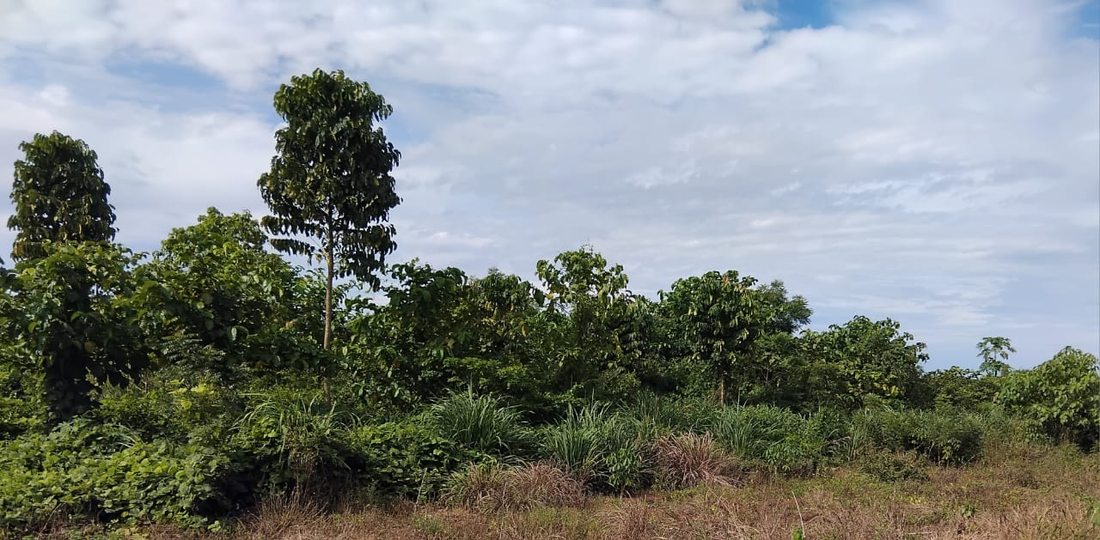
The section of the Udakpa pilot site first planted in 2019/2020 has, by 2024, been completely transformed into a successfully rehabilitated stand of indigenous timber trees. Captioned "Ecorewire Centre — successfully rehabilitated portion (2024)" in the original field documentation, the site is now populated with saplings and young trees of Nauclea diderrichii and Khaya spp. in vigorous height growth, having attained the initial stage of canopy closure. Five years after the first seedlings were planted on bare degraded agricultural land, the plot now functions as a structurally distinct young tropical forest — compelling evidence that the FLR methodology delivers measurable ecological recovery on degraded Nigerian landscapes.
2024 · 5 years on
 Restoration Progress · 2025
08
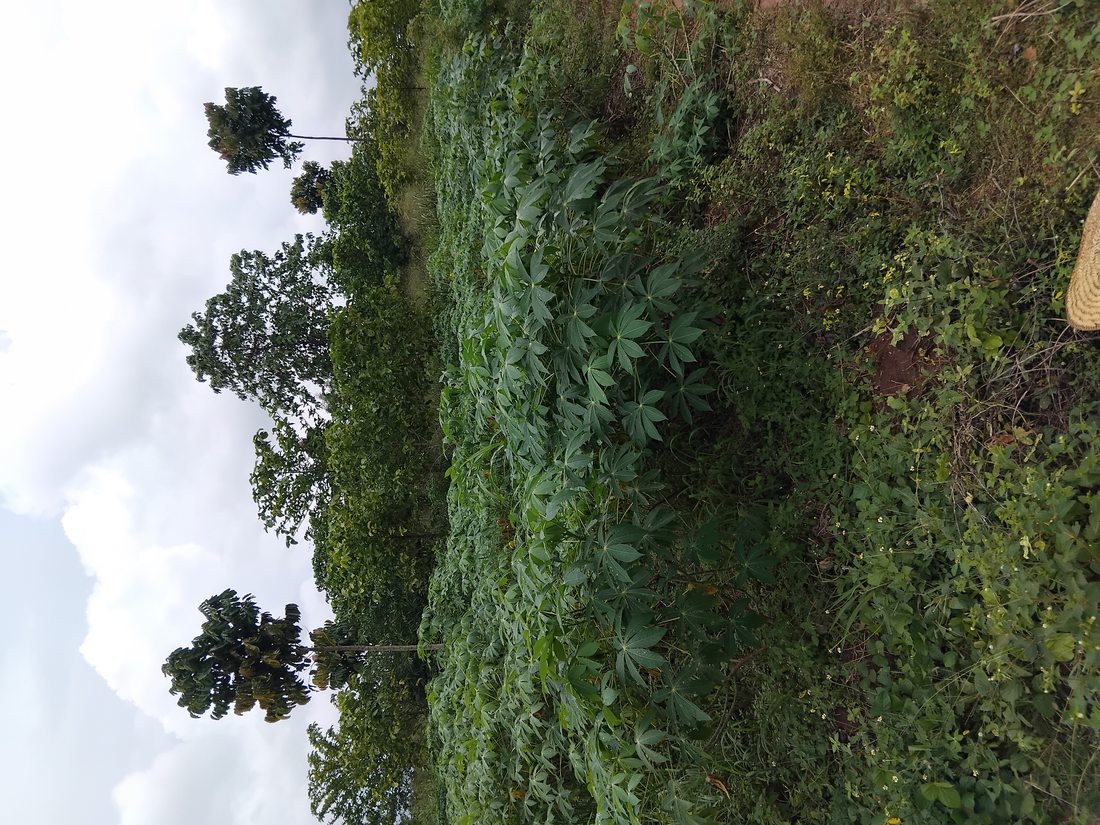
Cassava crop at the frontal of restored forest at Ecorewire Centre Project Site (2025)
Project 08 · 2025
Agroforestry · Forest Frontal
Six years on — restored forest stands behind active cassava cultivation
Ecorewire Centre Project Site, Udakpa · 2025
By 2025, the agroforestry mosaic at the Udakpa pilot site has matured considerably. This photograph, taken in 2025, shows cassava cultivation at the frontal (margin) of the established restored forest zone — lush green cassava in the foreground with the developing tree canopy visible behind. This is exactly what ECOREWIRE's FLR model aims to achieve: a gradual, progressive transition from degraded farmland to a functioning forest ecosystem, achieved without displacing the farming communities whose livelihoods depend on the land. The contrast between the food crop margin and the established forest behind it in a single frame is one of the most compelling visual arguments for ECOREWIRE's inclusive approach to tropical forest restoration.
2025
External Client Projects · 2022 – 2025
88,880
Edo State Forestry Commission (ESFC)
3 senatorial districts · 2023–2024
21,200
Teasoo Consulting / Seplat Nigeria Ltd
Ehor Forest Reserve · 6,000 ha · 2025
15,000
Okomu Oil Plc + SCERA
Okomu National Park · 2022–2024
2,000
Nigerian Institute for Oil Palm Research
Mixed-cropping research · 2024
1,000
SPDC / Edo State / NCF
Gelle Gelle Forest Reserve · 2024
25,000
Private Plantation Investors
Teak & Gmelina · 2022–2025
464 ha
Rubber Estate Nigeria Ltd (RENL)
Biodiversity assessment · Iguobazuwa · 2025
50,000
Aduwawa Nursery — 2025 Production
Indigenous species raised · 2025