 RENL · Community Livelihoods
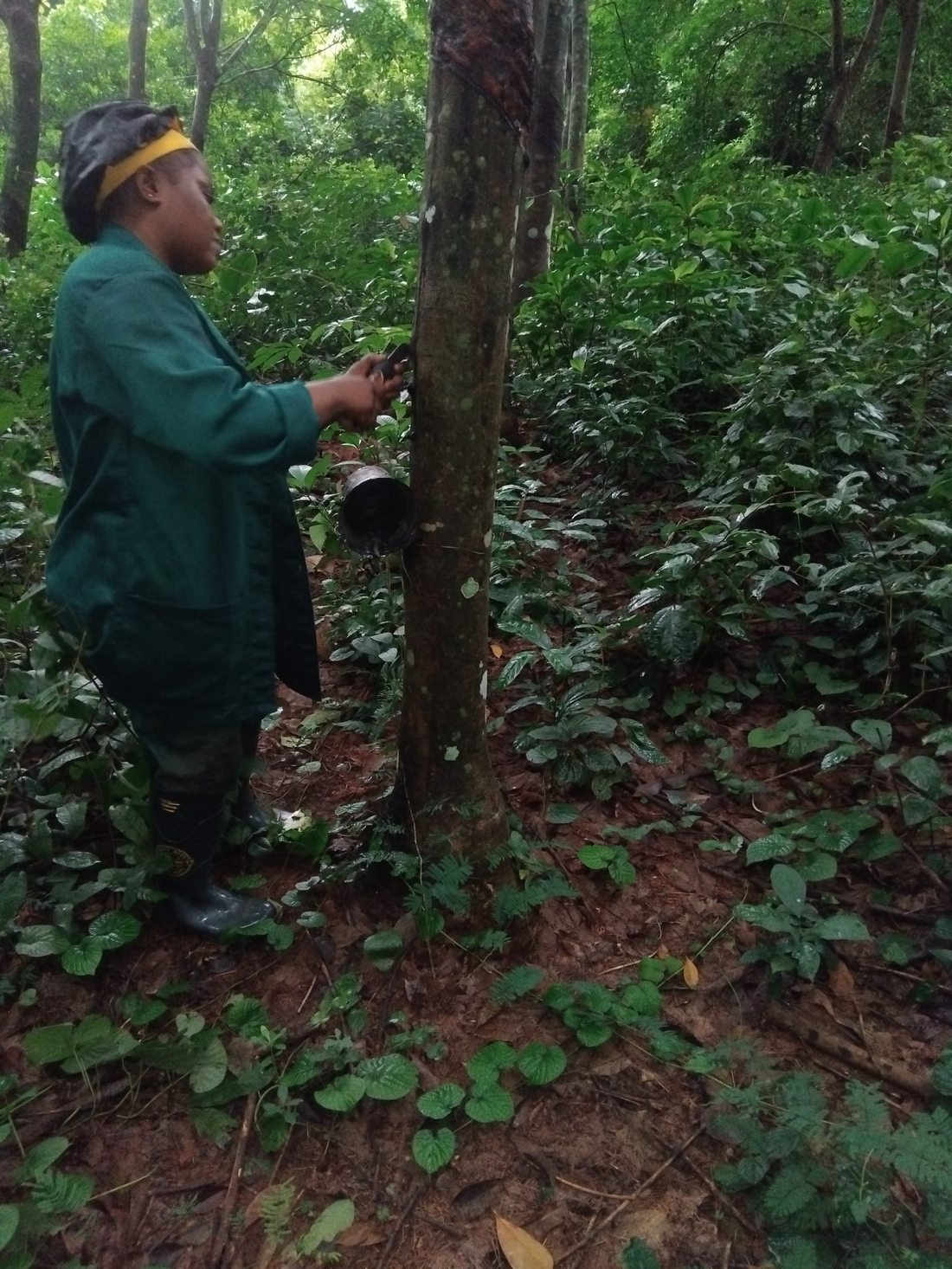
A dedicated lady rubber tapper at work in RENL Plantation bordering Conservation Area (2025)
A dedicated female rubber tapper at work in the RENL Plantation bordering the Conservation Area in Iguobazuwa Forest Reserve. This photograph, taken during the 2025 biodiversity and livelihood assessment, illustrates the critical role rubber tapping plays in the livelihoods of women in fringe communities — a finding that directly shaped the community engagement components of the FERBRAP action plan.
 Biodiversity Threats · Parasitic Species
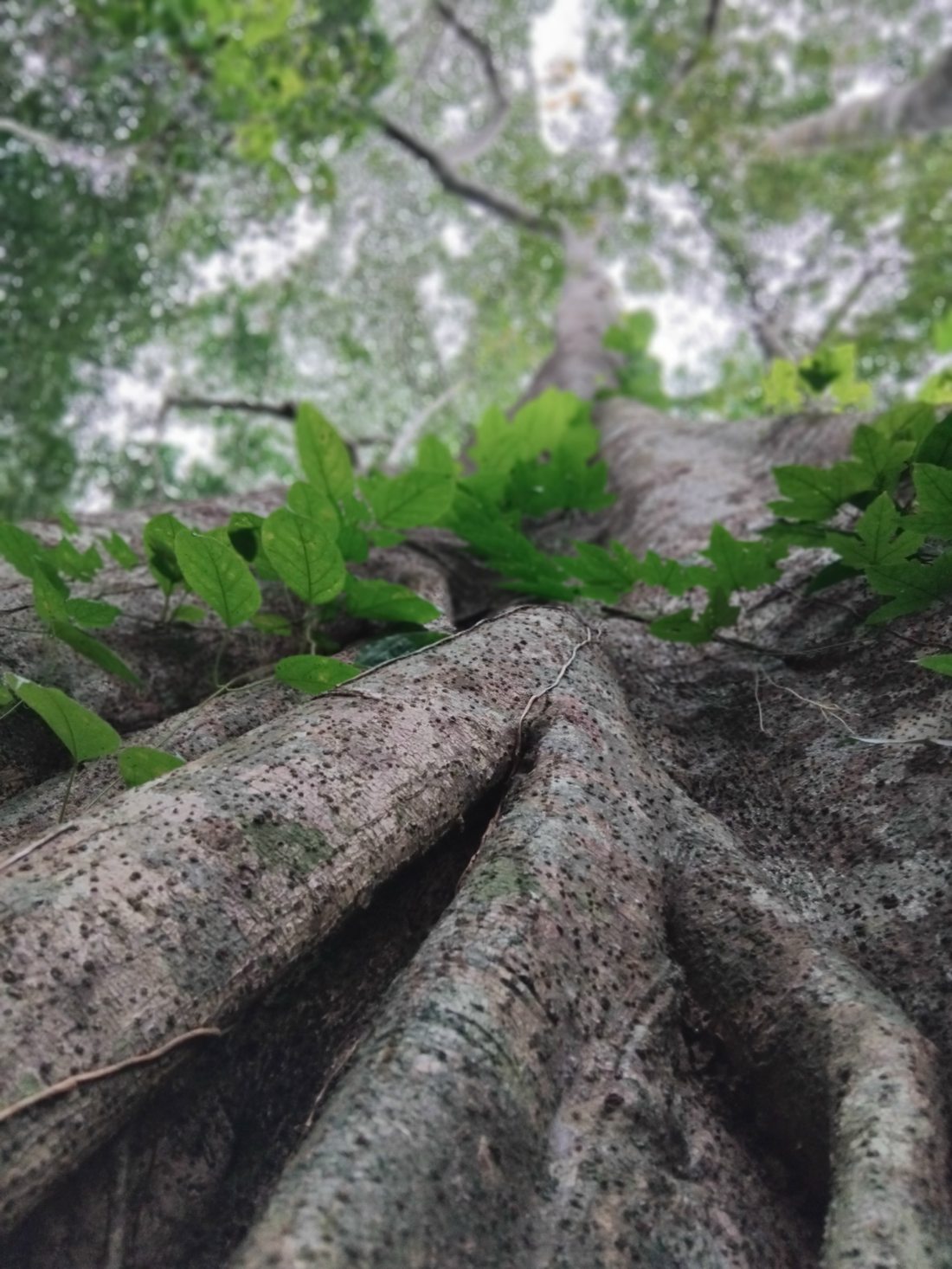
A large tree beleaguered by hemi-parasitic strangler fig tree at the terminal stage of being killed — Presco Conservation Area (2016)
A large indigenous timber tree in the terminal stage of being killed by a hemi-parasitic strangler fig in Presco Conservation Area (2016). Strangler figs and other hemi-parasitic species represent a severe but often overlooked threat to individual trees and forest biodiversity. This photograph was taken during an earlier ECOREWIRE field assessment and informs the team's approach to invasive species management.
 Iguobazuwa · Liana Infestation
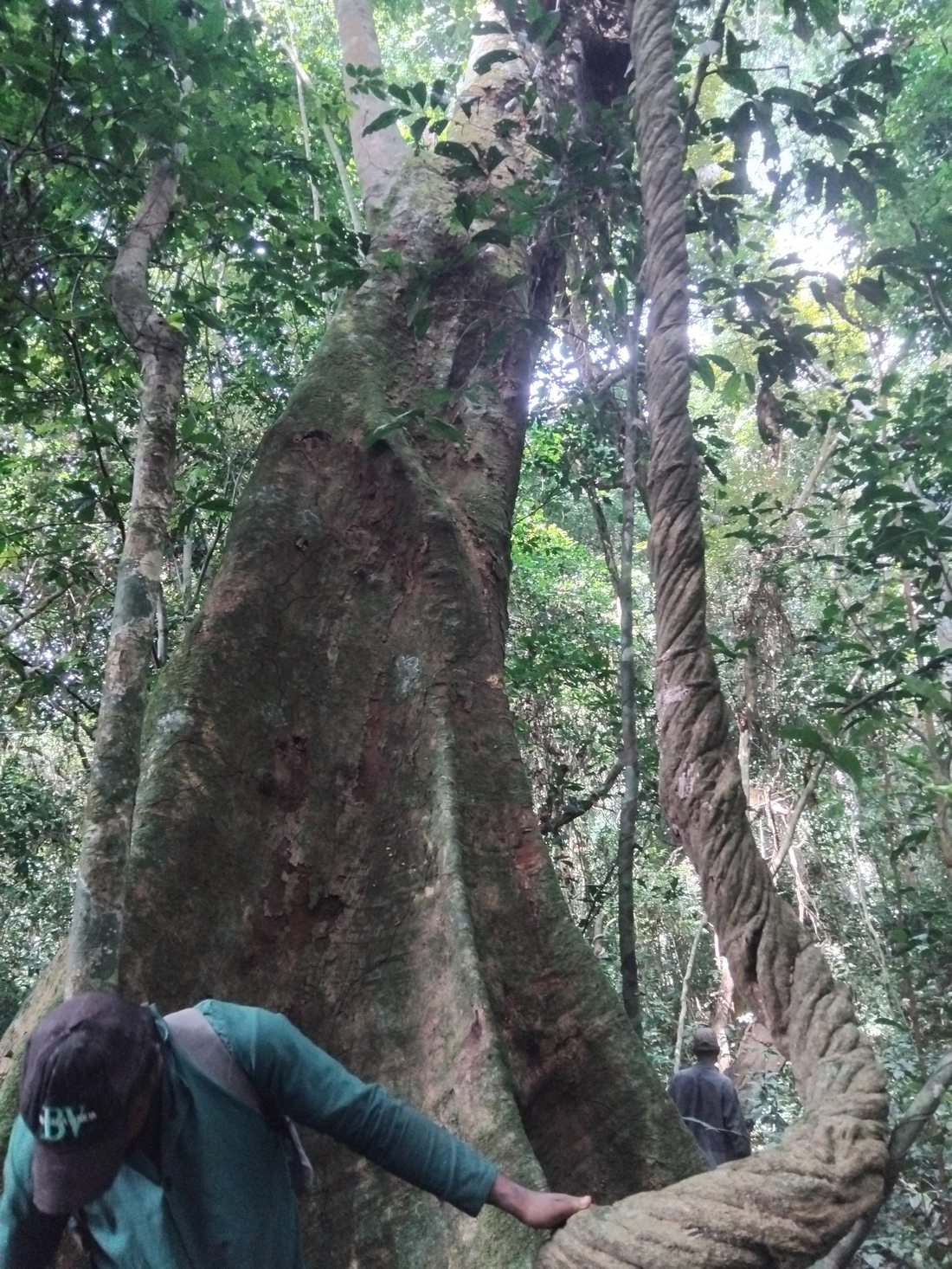
A large tree with convoluted liane — RENL Conservation Area, Iguobazuwa Forest Reserve (2025)
A large tree with convoluted liane (woody climbing vine) in the RENL Conservation Area, Iguobazuwa Forest Reserve (2025). Liana infestation is one of the most significant ecological threats identified in the 2025 biodiversity assessment — over 20% of timber trees in the Conservation Area show debilitating crown or bole damage caused by Acacia and other lianas, severely impeding natural regeneration and forest recovery.
 Udakpa · Agroforestry Model
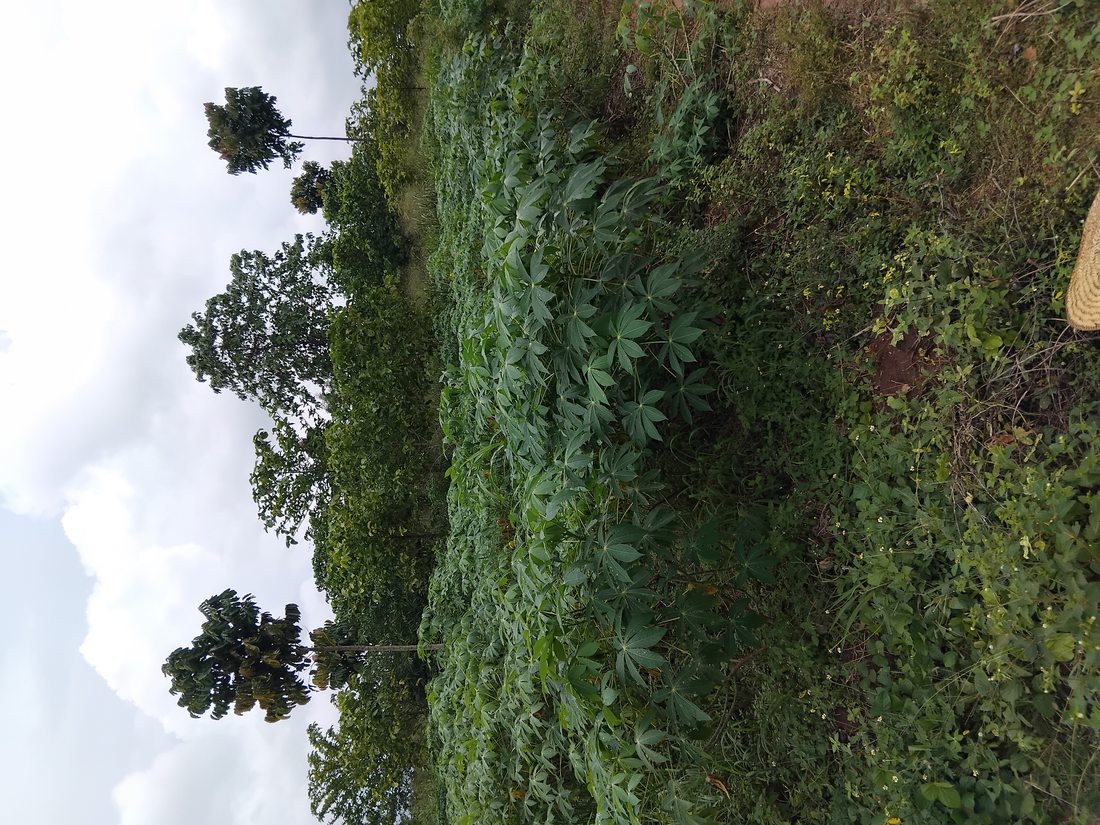
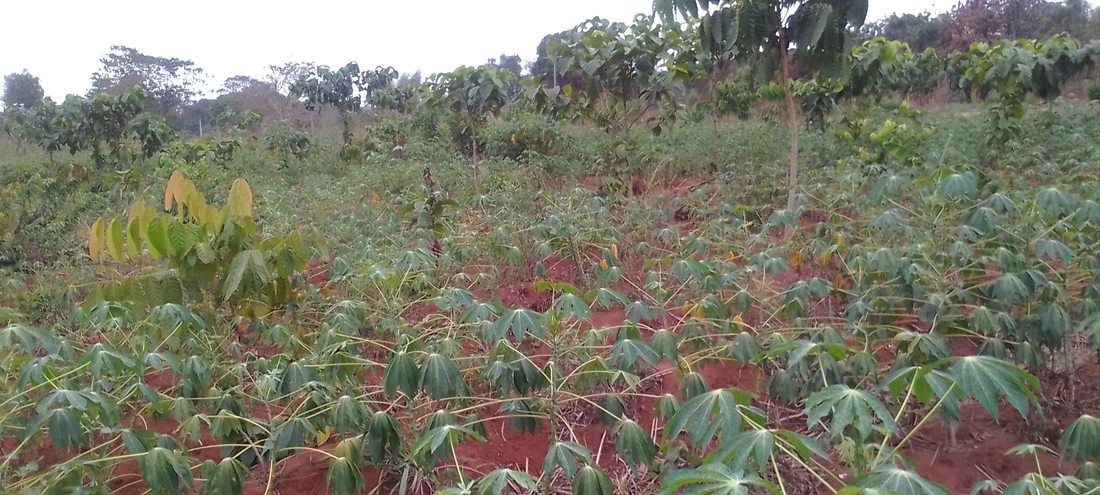
Cassava crop at the frontal of restored forest — Ecorewire Centre Project Site (2025)
Cassava crop at the frontal of the restored forest zone at ECOREWIRE Centre Project Site (2025). After six years of restoration, the agroforestry model continues to operate at the Udakpa site — subsistence farmers cultivate food crops at the forest margins while the indigenous timber tree canopy closes inward. The lush restored forest behind the cassava field is a testament to the success of the FLR methodology.
 Udakpa · Agroforestry Model
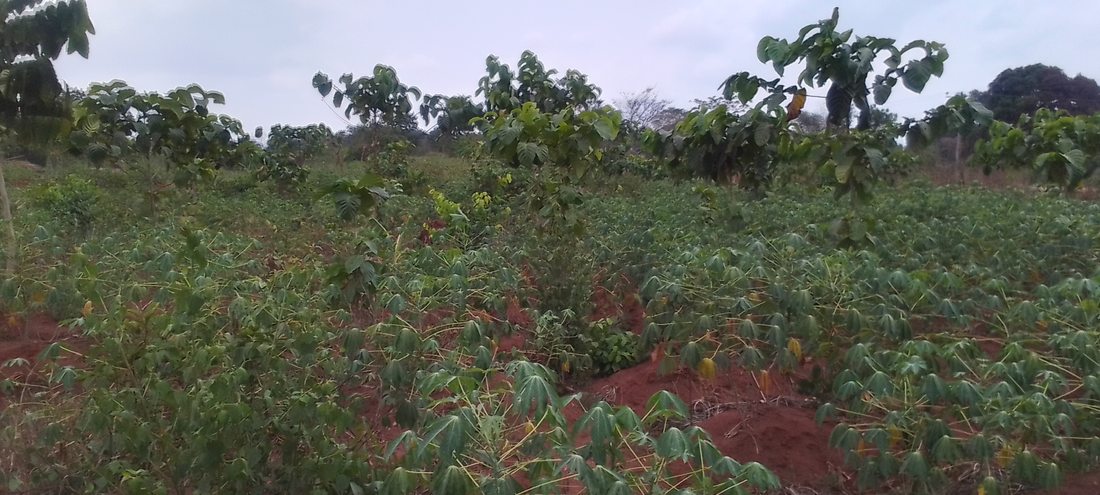
Cassava interplanted with forest tree seedlings — Ecorewire Centre Project Site (2022)
Cassava interplanted with forest tree seedlings at ECOREWIRE Centre Project Site (2022). This photograph illustrates the early phase of ECOREWIRE's inclusive agroforestry model: young indigenous timber tree seedlings are deliberately established alongside cassava crops, allowing subsistence farmers to cultivate food while the forest canopy develops. The cassava provides initial shelter and shade for the vulnerable seedlings while sustaining farming household incomes.
 River Catchment · Watershed Conservation
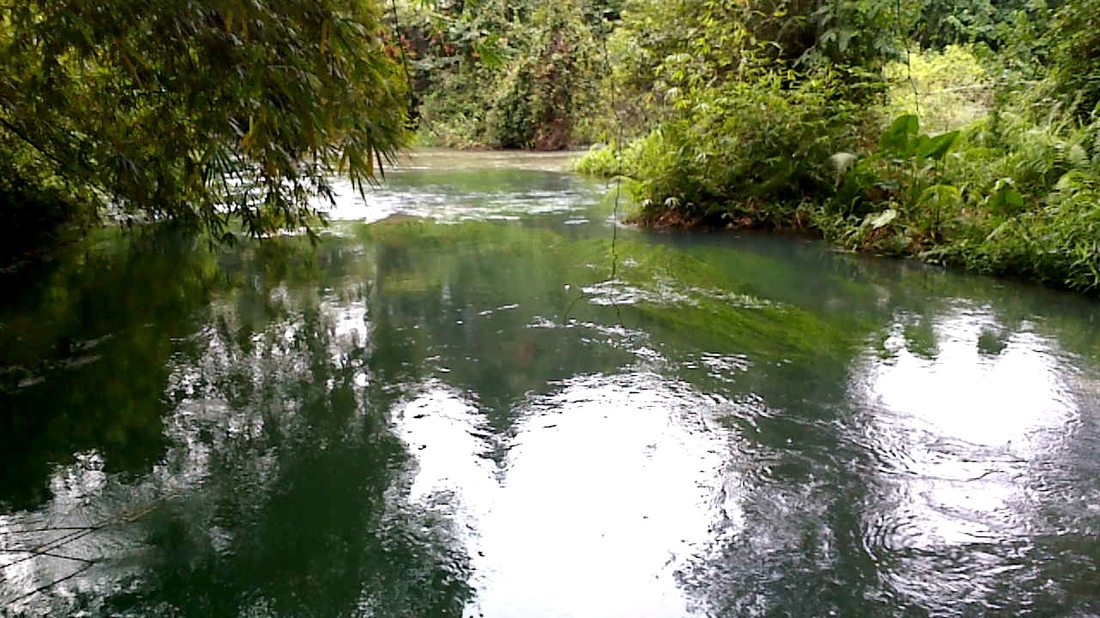
Confluence of Ebah and Orhiomwon Rivers — Amahor Forest Reserve
The confluence of the Ebah and Orhiomwon Rivers in Amahor Forest Reserve. River catchment and watershed conservation is one of ECOREWIRE's core service areas. This photograph documents a pristine riparian ecosystem within an Edo State forest reserve — the kind of aquatic habitat that ECOREWIRE works to protect and restore through its river catchment conservation programmes.
 Udakpa · Restoration Milestone
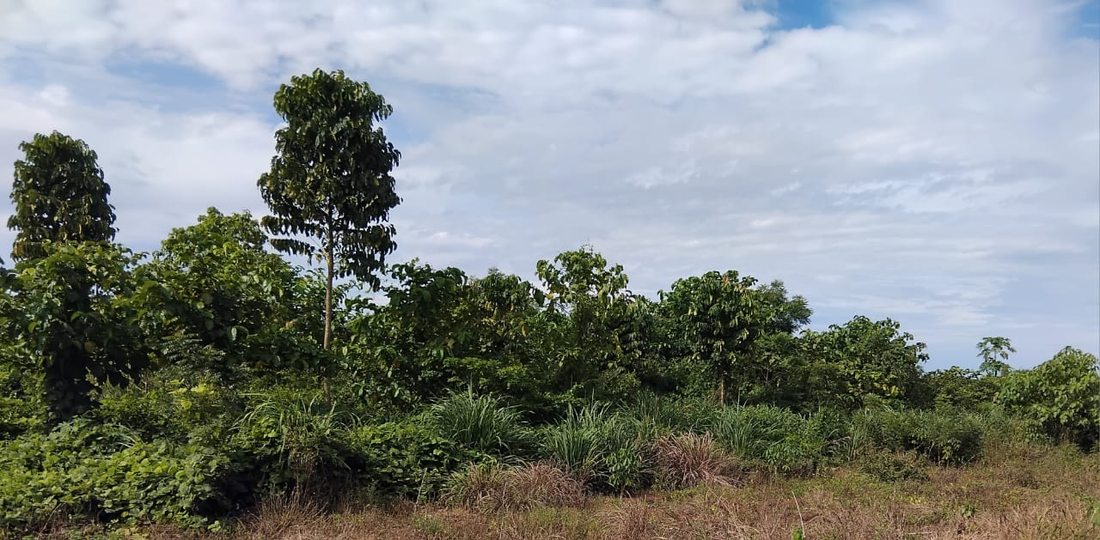
Ecorewire Centre — successfully rehabilitated portion (2024)
Ecorewire Centre — successfully rehabilitated portion (2024). This photograph captures one of the most significant milestones in ECOREWIRE's restoration history: the section of the Udakpa pilot site first planted in 2019/2020 has, by 2024, attained the initial stage of canopy closure. What was once bare, degraded agricultural land is now a structurally distinct young tropical forest populated with Nauclea diderrichii and Khaya spp. — compelling evidence that the Forest Landscape Restoration methodology delivers measurable ecological recovery.
 Udakpa · Pilot Site
Ecorewire Centre Project site (2022)
Ecorewire Centre Project site (2022). An overview of the Udakpa pilot site during the 2022 planting season, showing the mixed-age mosaic of restored indigenous timber trees across various zones of the 51-hectare site. By 2022, approximately 5 hectares had already been successfully planted with assorted endangered and vulnerable endemic rainforest timber tree species since the project's establishment in June 2019.
 Aduwawa Nursery · 2024
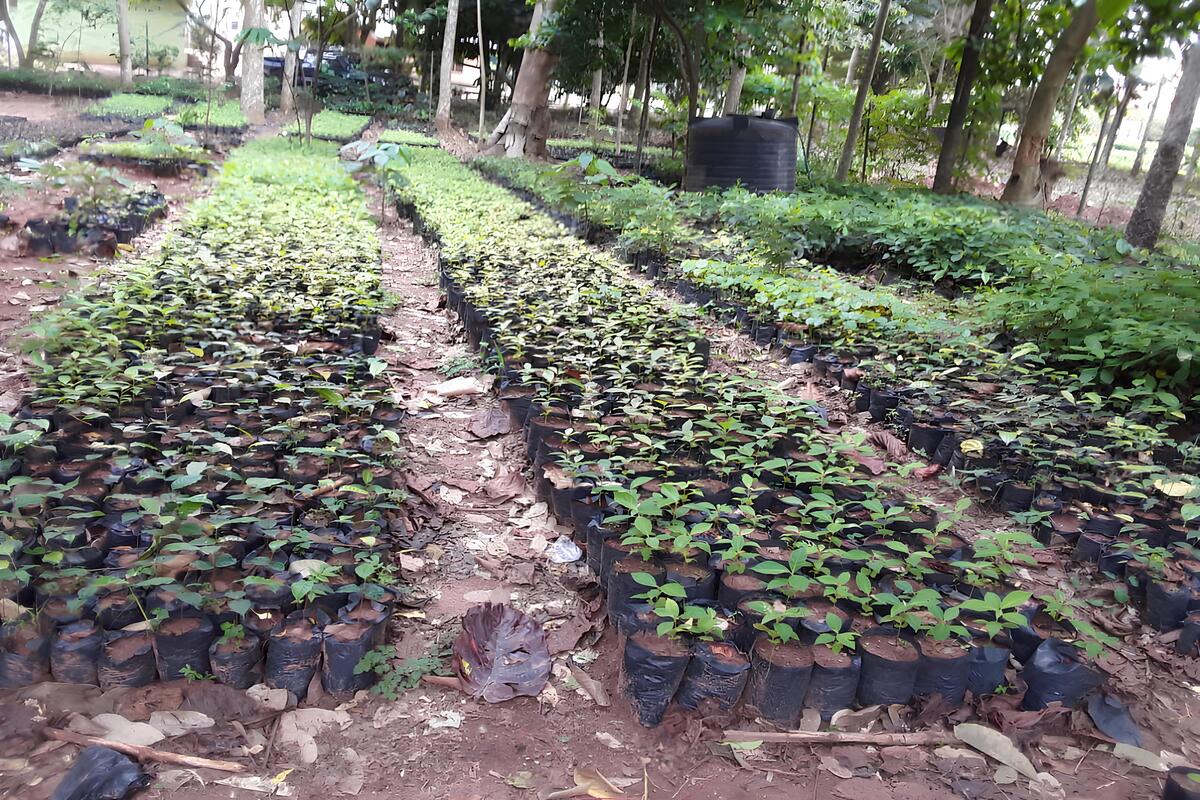
Ecorewire nursery at Aduwawa, Benin City (2024)
Ecorewire nursery at Aduwawa, Benin City (2024). The ECOREWIRE nursery at Aduwawa serves as the central propagation hub for all restoration and client supply work. This photograph shows thousands of potted seedlings in nursery bags arranged in rows — the 2024 production cycle raised 50,000 assorted indigenous species seedlings, with species including Nauclea diderrichii, Khaya spp., and other endangered and vulnerable taxa on the IUCN Red List.
 Aduwawa Nursery · 2024
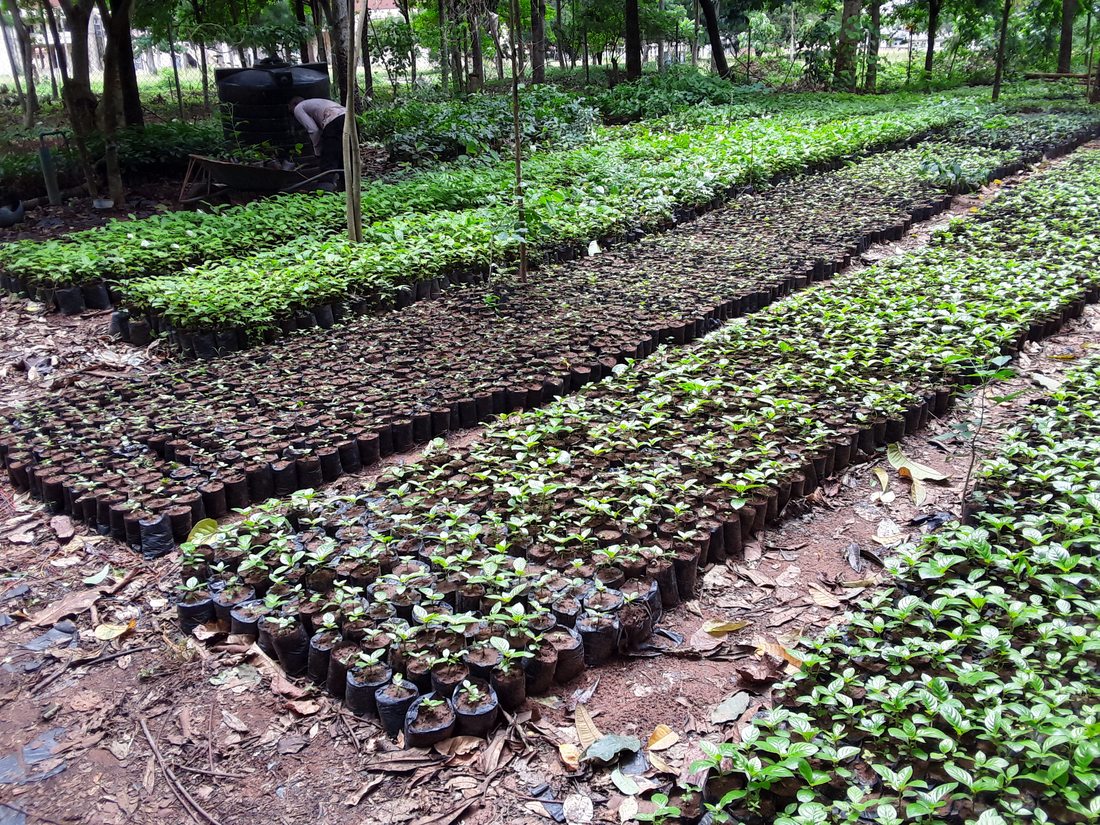
Ecorewire nursery in 2024
Ecorewire nursery (2024). A second view of the Aduwawa nursery showing the scale and diversity of the 2024 seedling production cycle. The nursery operates year-round, maintaining a living catalogue of Edo State's native tree species. Seedlings are matched to the specific ecological conditions of each client project site before dispatch to maximise field survival rates.
 Aduwawa Nursery · 2023
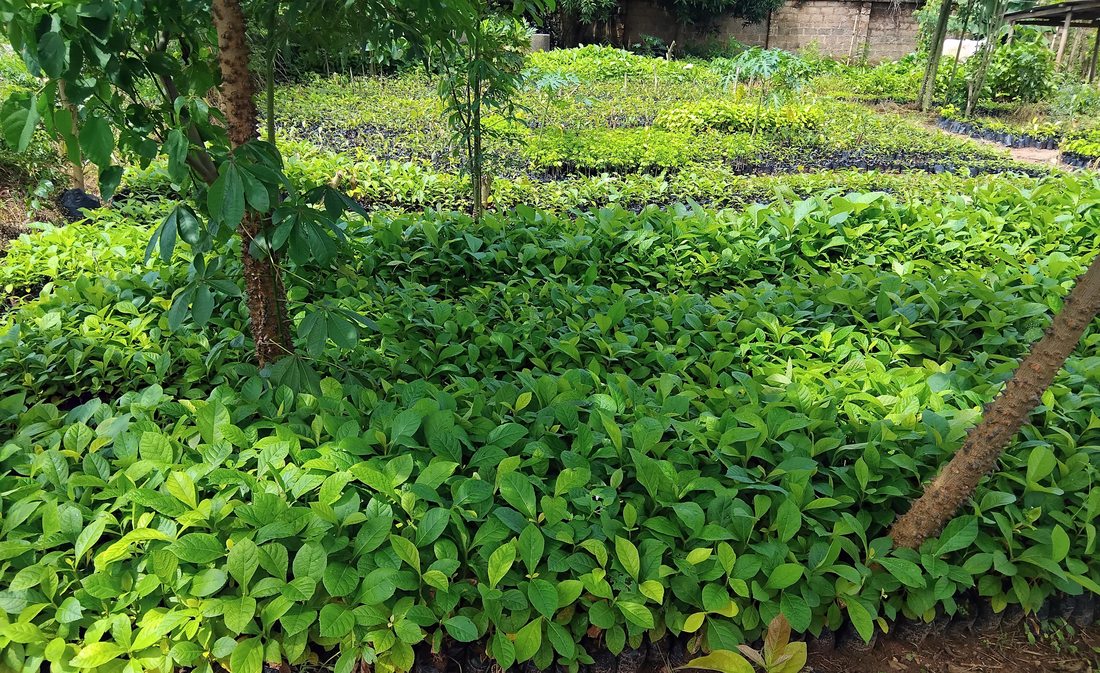
Ecorewire nursery in Benin City (2023)
Ecorewire nursery in Benin City (2023). The Aduwawa nursery during the 2023 production cycle, showing a rich canopy of advanced-stage seedlings at various stages of development — from newly pricked-out seedlings in small bags to larger, hardened-off specimens ready for field transport. The 2023 nursery production supplied seedlings to multiple client contracts including the Edo State Forestry Commission (ESFC).
 Udakpa · Fire Management
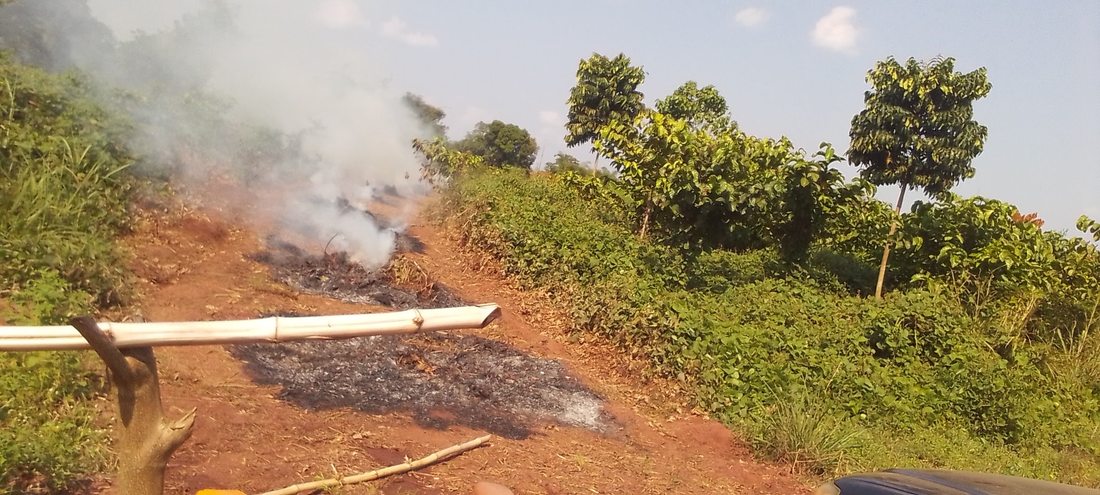
Fire-trace track in Ecorewire Centre (2022/2023)
Fire-trace track in Ecorewire Centre (2022/2023). This photograph shows one of the fire-trace firebreak corridors being established at the Udakpa pilot site during the 2022/2023 dry season response programme. Following two devastating wildfire incidents that destroyed approximately 10 hectares of restored forest, ECOREWIRE's field teams established systematic firebreak corridors — strips of cleared, low-fuel ground — to block the lateral spread of future fires moving in from neighbouring farmland.
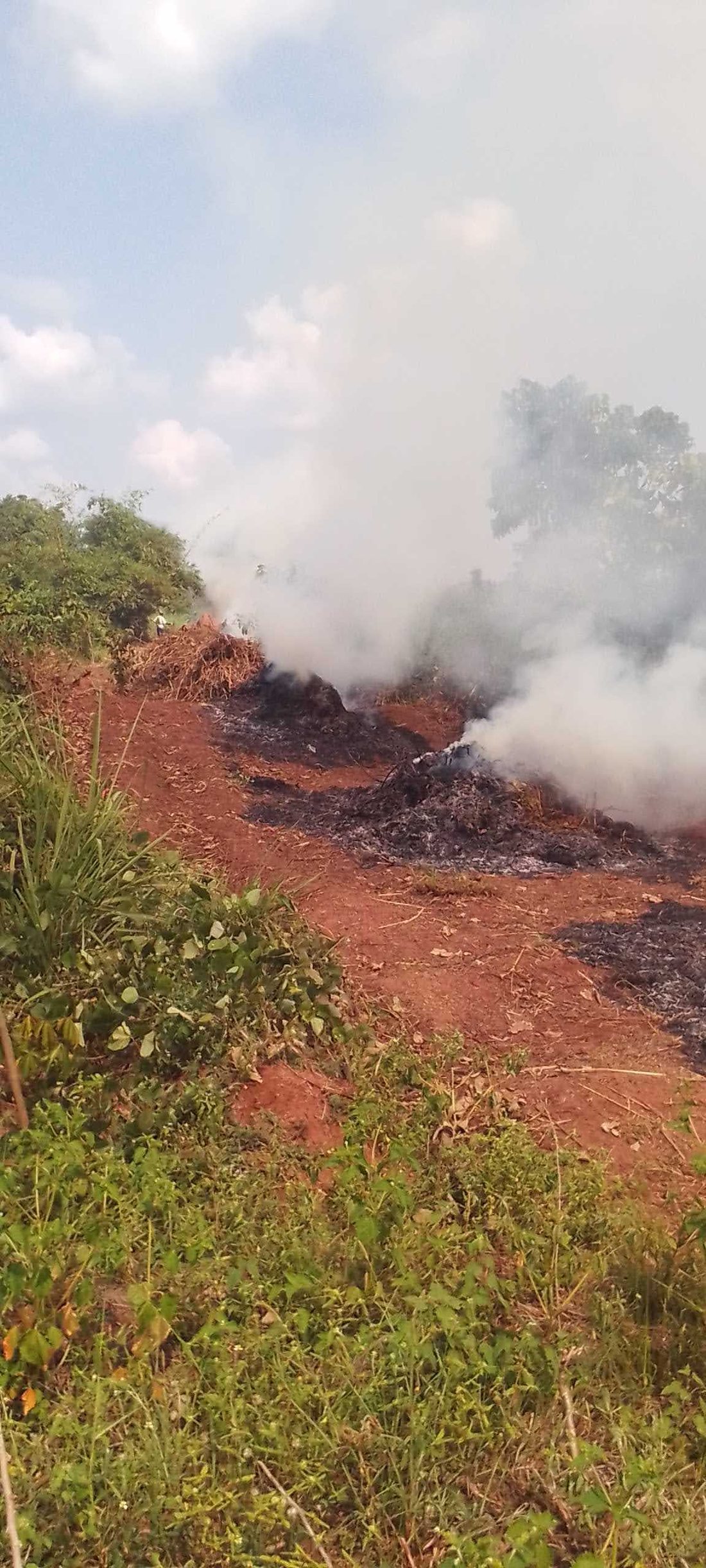 Udakpa · Fire Management
Fire-trace track in Ecorewire Centre Project Site (2023)
Fire-trace track in Ecorewire Centre Project Site (2023). The second major fire-trace track established at the Udakpa site during 2023, showing the scale of the firebreak clearing operation. The controlled burning of accumulated biomass along the firebreak corridor is visible in this photograph — a technique used to create a wide, low-fuel buffer zone. The fire-tracing programme proved fully effective: the 2024 dry season passed without any repeat wildfire incidents at the site.
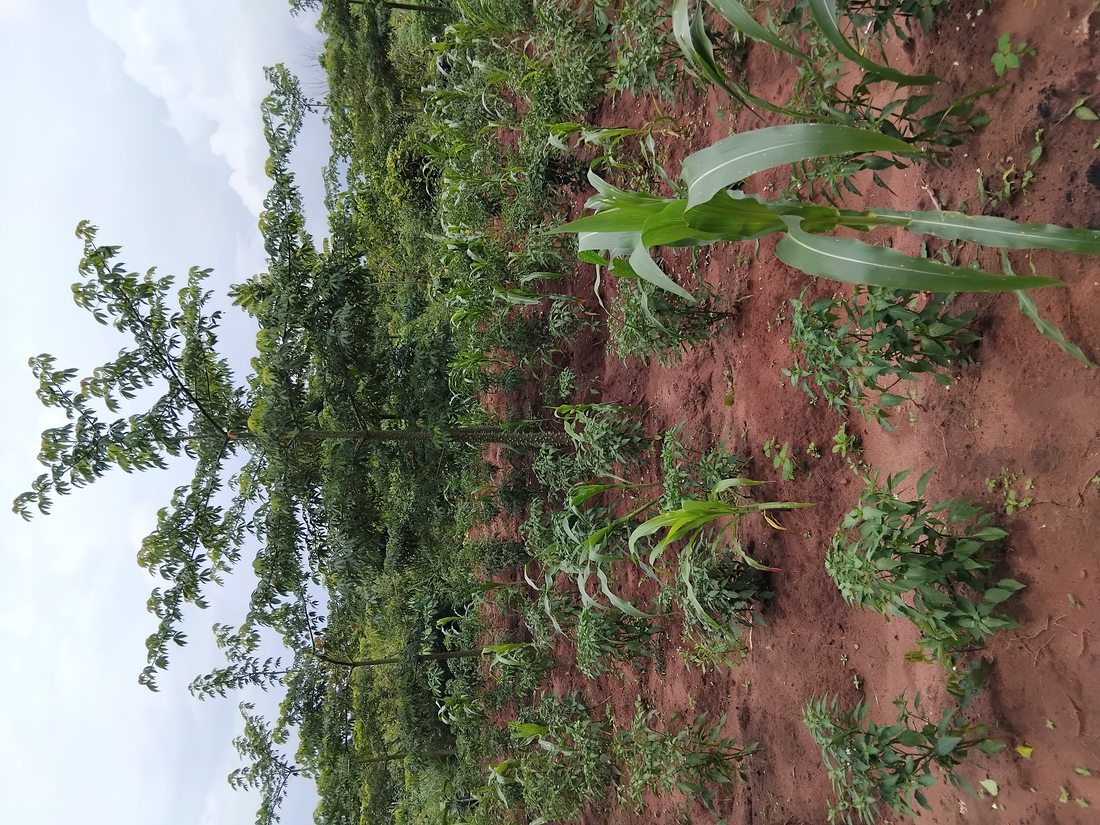 Udakpa · Agroforestry Model
Forest tree and arable crop mixture — Ecorewire Project Site (2024)
Forest tree and arable crop mixture at Ecorewire Project Site (2024). By 2024, ECOREWIRE's agroforestry model at the Udakpa site had evolved into a mature multi-storey mixed system. This photograph shows maize and other arable crops growing alongside established indigenous timber tree saplings at various growth stages. The mixture demonstrates the practical success of the 'double filter' approach: restoring ecological landscapes while simultaneously sustaining the livelihoods of farming communities who depend on the land.